
No-Pull Harness vs Traditional Collar: Which Is Better for Strong Pullers?
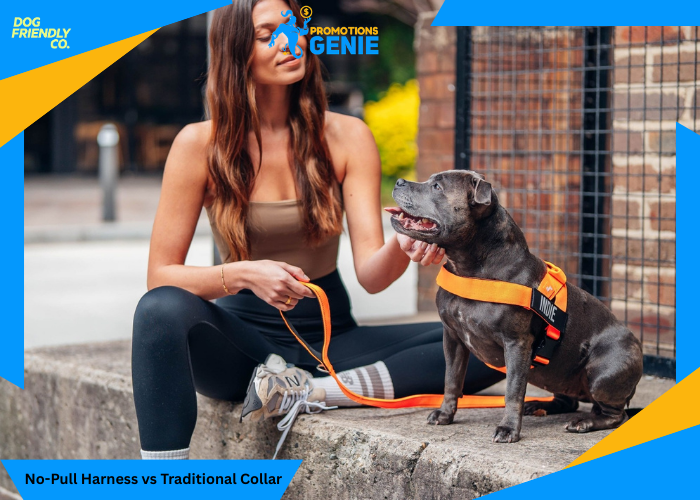
If your dog turns every walk into a tug-of-war, you’re not alone. Strong pullers are common, especially in high-energy breeds and young dogs still learning leash manners.
The real question is simple: should you stick with a traditional collar, or switch to a no-pull harness?
Using gear from Dog Friendly Co. as an example, let’s break down the difference and figure out what actually works for strong pullers.
Why Dogs Pull in the First Place
Before comparing gear, it helps to understand the behavior.
Dogs pull because:
-
They’re excited
-
They walk faster than humans
-
They want to explore smells and movement
-
They were never properly leash-trained
Pulling isn’t always about dominance. Often, it’s just energy combined with lack of structure.
The right equipment won’t replace training, but it can make walks safer and more manageable.
What Is a Traditional Collar?
A traditional collar sits around the dog’s neck and usually features:
-
Nylon or reinforced webbing
-
A buckle or clip
-
A D-ring for leash attachment
It’s simple and works well for:
-
Holding ID tags
-
Calm, leash-trained dogs
-
Short, controlled walks
However, for strong pullers, attaching a leash to a neck collar creates direct pressure on the throat.
What Is a No-Pull Harness?
A no-pull harness wraps around the dog’s chest and shoulders rather than the neck.
Dog Friendly Co.’s No-Pull Dog Harness features:
-
A front D-ring attachment
-
Adjustable straps
-
A secure, body-hugging fit
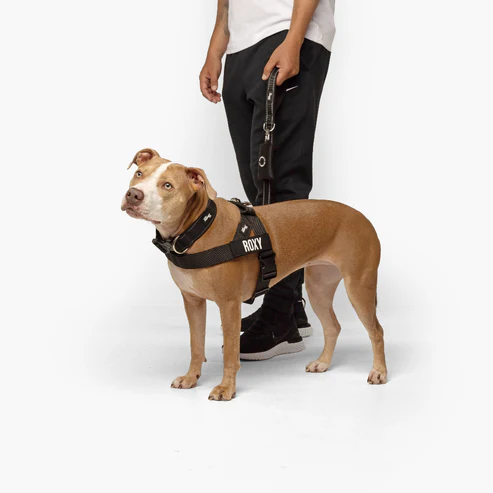
The front D-ring is key. When a dog pulls forward, the leash redirects their body slightly to the side. This interrupts forward momentum and discourages pulling without choking pressure.
Side-by-Side Comparison
Here’s a clear comparison for strong pullers:
| Feature | Traditional Collar | No-Pull Harness |
|---|---|---|
| Leash Attachment | Neck | Chest (front D-ring) |
| Pressure Point | Throat and trachea | Chest and shoulders |
| Control Level | Limited for strong dogs | Higher directional control |
| Risk of Strain | Higher if dog lunges | Lower neck strain |
| Best For | Calm, trained dogs | Strong or reactive pullers |
| Training Support | Minimal | Helps reinforce loose-leash walking |
The biggest difference is pressure placement and control.
Safety Considerations for Strong Pullers
With a traditional collar, repeated pulling can cause:
-
Neck strain
-
Coughing or gagging
-
Increased pressure on the trachea
-
Frustration for both dog and owner
For small breeds or dogs prone to respiratory issues, neck pressure can be especially risky.
A no-pull harness distributes force across the chest and torso instead of the throat. This reduces the chance of injury while giving you better handling.
When a Collar Is Still Useful
This doesn’t mean collars are useless.
Collars are still important for:
-
Holding ID tags
-
Quick bathroom breaks
-
Dogs that already walk politely
-
Layering with a harness
Some owners pair a tactical collar with a harness for added durability and identification.
Combining the Right Tools
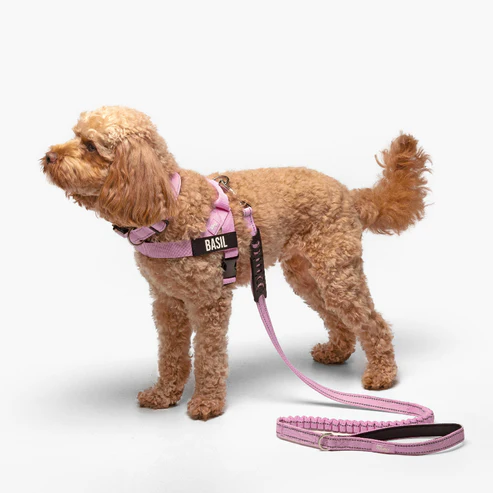
For strong pullers, a complete setup might include:
-
No-pull harness for leash attachment
-
Bungee leash to absorb shock
-
Durable collar for tags
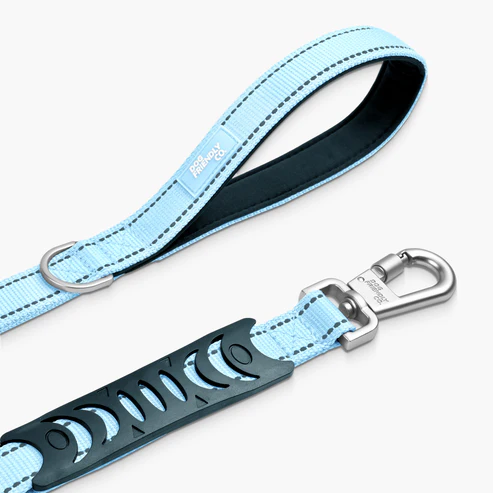
Shock-absorbing leashes can reduce sudden jolts, making walks more comfortable for both you and your dog.
Training Still Matters
Even the best harness won’t magically fix pulling.
To improve results:
-
Reward loose leash walking
-
Stop walking when pulling starts
-
Keep leash tension consistent
-
Practice in low-distraction areas first
The no-pull harness acts as a training aid, not a shortcut.
So, Which Is Better for Strong Pullers?
For dogs that consistently pull hard, a no-pull harness is usually the safer and more effective option.
It provides:
-
Better directional control
-
Reduced neck strain
-
Improved comfort
-
More structured training support
Traditional collars are fine for calm dogs, but they’re not ideal for heavy pullers.
Final Thoughts
If walks feel stressful or physically exhausting, your equipment might be part of the problem.
A no-pull harness offers better control and safer pressure distribution for strong pullers, while traditional collars work best for well-trained dogs who already walk politely.
Choosing the right gear isn’t about trends. It’s about safety, comfort, and making daily walks more enjoyable for both of you.
At PromotionsGenie, we are dedicated to helping you shop more intelligently, spend more judiciously, and find superior value online. Regardless of whether you are a student, a parent, a fashion enthusiast, or just a sensible shopper, we link you to dependable savings opportunities and trustworthy buying options from your preferred brands across the globe
Subscribe
Sign up below to receive money-saving tips, frugal ideas, family-friendly recipes, and more.