
Fosi Audio Review (2026): Are Fosi Amps Really This Good for the Money?
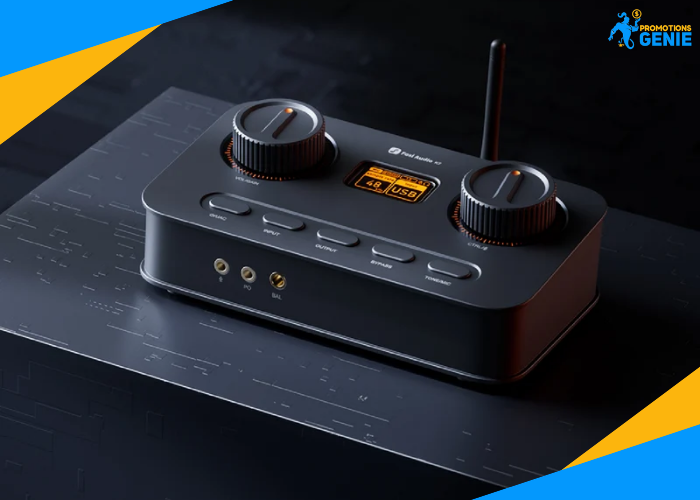
Quick Verdict
| Category | Verdict |
| Overall Rating | 9.2/10 |
| Best For | Budget-conscious hi-fi enthusiasts, desktop systems and passive bookshelf speakers |
| Sound Quality | Excellent for the price |
| Power & Efficiency | Excellent |
| Build Quality | Very Good |
| Features | Model dependent |
| Value for Money | Outstanding |
Introduction
Hi-fi has traditionally had a pricing problem. Spend enough time around audiophile equipment and you'll eventually encounter amplifiers costing as much as a good television—or a used car. That doesn't necessarily mean expensive audio equipment is pointless. Better engineering, power supplies, components, connectivity and construction can matter. But the emergence of inexpensive Class-D amplifiers has changed what buyers should expect at the affordable end of the market. Fosi Audio is one of the companies pushing that change. Its compact amplifiers don't look particularly intimidating. Some are barely larger than a stack of paperback books. Yet products such as the V3, ZA3 and BT20A Pro use Texas Instruments' TPA3255 Class-D amplification platform and offer specifications that would have looked remarkably ambitious for affordable desktop amplifiers not long ago.
That inevitably raises questions. Is Fosi Audio good, or is this simply impressive marketing wrapped around inexpensive hardware? Can something as small as the V3 properly drive passive speakers? Is the ZA3 worth paying extra for? Would the Bluetooth-equipped BT20A Pro make more sense for an everyday living-room system? And if you're shopping in this category, how does Fosi Audio vs Aiyima compare?
This Fosi Audio review looks at the brand as a whole while focusing on the three amplifiers most buyers are likely to encounter: the V3, ZA3 and BT20A Pro.
Check Today's Price
What Is Fosi Audio?
Fosi Audio specializes in affordable hi-fi equipment, particularly compact amplifiers, DACs, headphone equipment, preamps and related desktop-audio products. Its current lineup goes considerably beyond basic Bluetooth amplifiers. The company's site features dedicated stereo amps, monoblocks, preamps, phono stages, DACs and other components intended to be combined into modular systems. That modular philosophy is important. Traditional integrated amplifiers often try to do everything inside one large chassis: amplification, source selection, tone controls, DAC conversion, Bluetooth, phono amplification and sometimes network streaming.
Fosi frequently takes the opposite approach. Some models are deliberately simple. The V3, for example, concentrates primarily on stereo amplification. Others, such as the BT20A Pro, integrate Bluetooth and tone controls for users who want a more convenient all-in-one experience. This allows buyers to pay for the functionality they actually need. The target audience ranges from someone powering inexpensive bookshelf speakers on a desk to enthusiasts building modular systems with separate DACs, preamps and power amplifiers.
Key Features
Compact Class-D Amplification
Size is one of the first things that separates Fosi from conventional hi-fi equipment. Traditional stereo amplifiers can occupy an entire shelf. Fosi's mini amplifiers deliver their amplification from dramatically smaller enclosures. Class-D technology is central to this. Class-D amplifiers can achieve high efficiency while producing relatively little wasted energy compared with many traditional amplifier designs. That makes compact, powerful amplification much more practical.
Several popular Fosi models including the V3, ZA3 and BT20A Pro—use Texas Instruments' TPA3255 amplifier chip. The result is a range of amplifiers capable of driving many conventional passive speaker systems without requiring an enormous chassis.
Different Amplifiers for Different Systems
One of Fosi Audio's strengths is also something buyers need to understand before ordering: the models aren't interchangeable. The V3 is intentionally simple. Fosi currently lists the V3 Mini Stereo Amplifier with RCA input, speaker output and pre-out, with no bass or treble controls. The company specifies a maximum output figure of 2 × 300W into 4 ohms, depending on configuration and power supply. The ZA3 is more ambitious. It adds balanced XLR connectivity, supports stereo and mono configurations, and provides an active-subwoofer output. Fosi's documentation specifies 155W × 2 into 4 ohms in stereo with a 48V/5A supply, while mono operation is also supported.
Then there's the BT20A Pro. It adds Bluetooth 5.0, RCA input, pre-out and physical bass and treble controls, making it more approachable for someone who wants a compact everyday amplifier rather than a minimalist audiophile component. That's why a Fosi purchase should begin with your system rather than simply choosing whichever amplifier has the biggest number on its product page.
Fosi Audio V3 Review
The V3 is arguably the model that best represents Fosi's performance-first philosophy. It's a compact 2-channel amplifier based on the TPA3255 platform with RCA input, speaker outputs and pre-out. Fosi lists THD+N below 0.003% and SNR of at least 110dB for the model. But its appeal isn't really the specification sheet. It's simplicity. Connect a source, connect your speakers, set the volume and listen.
There are no tone controls and no Bluetooth receiver built into the basic V3. For someone wanting one compact box to handle everything, that's a disadvantage. For someone already using a DAC, streamer or preamp, it's almost the point. You aren't paying for features you may never use.
How Does the V3 Sound?
The character most buyers should expect is clean and relatively neutral rather than deliberately warm or colored. That makes it a good match for listeners who want the amplifier to stay out of the way. Speaker choice, room acoustics and source quality will generally have a much larger influence on the final sound than chasing tiny differences between competent amplifiers. The V3 therefore works particularly well as an affordable foundation for a serious two-channel system.
Fosi Audio ZA3 Review
If the V3 is about simplicity, the ZA3 is aimed at enthusiasts who want more flexibility. Fosi describes the ZA3 as a balanced Class-D amplifier supporting RCA and XLR inputs. Its manual specifies 2–8 ohm speaker compatibility, a subwoofer output and the ability to operate in stereo or mono. That last feature is particularly interesting. A single ZA3 can power a normal stereo system. Alternatively, two units can be used in a monoblock-style configuration for buyers who want to experiment with a more ambitious setup.
Balanced connectivity is another meaningful addition. XLR connections can provide better resistance to interference in appropriate systems, particularly with longer cable runs or equipment designed around balanced connections. For a simple desktop setup, this may be unnecessary. For an enthusiast assembling a DAC/preamp/power-amplifier chain, it makes the ZA3 substantially more versatile.
Replaceable Op-Amps
The ZA3 also supports replaceable op-amps. This appeals to hobbyists who enjoy experimenting with components and tweaking their systems. It isn't something every buyer needs to touch. In fact, someone simply looking for good sound can leave the stock configuration alone and enjoy the amplifier. But the option reinforces Fosi's appeal to the DIY-minded hi-fi community.
Fosi Audio BT20A Pro Review
The BT20A Pro may be the easiest Fosi amplifier to recommend to someone who doesn't consider themselves an audiophile. Why?
Convenience. It combines RCA connectivity with Bluetooth 5.0 and adds physical bass and treble controls. Fosi also provides a 3.5mm pre-out. That means you can connect a traditional source through RCA while also streaming music directly from a phone, tablet or computer. The tone controls are equally useful. Audiophile discussions sometimes treat tone controls as undesirable, but real rooms aren't acoustically perfect and not every recording is mastered identically. Being able to add a little bass or reduce an overly bright presentation can be genuinely useful.
Fosi specifies the BT20A Pro with a TPA3255 chip, SNR of at least 108dB and THD at or below 0.005%. It supports 2–8 ohm speakers and different 32V or 48V power-supply options. For a compact living-room, office or desktop setup, it offers an impressive balance between simplicity and flexibility.
First Impressions
Fosi products tend to make their strongest impression through size. If you're accustomed to full-width stereo receivers, the idea that such a small enclosure can properly power passive speakers initially feels strange. The industrial design is generally understated. You're getting functional metal enclosures, straightforward controls and a layout that prioritizes compactness rather than luxury decoration. Setup depends heavily on the model. A BT20A Pro can be extremely straightforward: attach the Bluetooth antenna, connect the supplied power supply, wire your passive speakers and pair your phone. The V3 assumes you already have an analog source.
The ZA3 is more likely to appeal to someone assembling a component system using RCA or balanced connections. Fosi includes a power adapter with configurations of models such as the BT20A Pro, although power-supply options vary by package. The first lesson is simple: check exactly which amplifier and power supply you're ordering.
Performance & Real-World Experience
Sound Quality
The most important conclusion from a Fosi Audio amp review is that inexpensive doesn't automatically mean poor sound. Modern Class-D amplification has become remarkably capable. With suitable speakers and a sensible source, Fosi's better amplifiers can produce a clean, controlled and convincing stereo presentation without making the amplifier itself the center of attention. That makes them particularly useful for budget hi-fi. Instead of spending the majority of your system budget on amplification, you can allocate more toward speakers where differences are often much more obvious.
Power in Real Systems
This is where buyers need to be careful with specifications. Fosi advertises very high maximum power figures for several models. The V3 and BT20A Pro, for example, are listed with maximum figures reaching 300W × 2 into 4 ohms in certain configurations. That doesn't mean every setup will continuously produce 300 watts per channel. Actual available output depends on speaker impedance, power supply, distortion threshold, channel loading and other conditions. The ZA3's own documentation illustrates the distinction nicely: with a 48V/5A supply, Fosi specifies a rated stereo output of 155W × 2 into 4 ohms, despite higher maximum figures appearing in broader product comparisons.
The sensible takeaway isn't that the amplifiers are underpowered. It's that shoppers shouldn't buy amplifiers by comparing the largest wattage number in an advertisement. For typical bookshelf and many floorstanding speakers in normal rooms, these amplifiers can provide substantial usable output.
Heat and Efficiency
Compact amplifiers still generate heat. Class-D is efficient, not magical. Fosi uses ventilation and thermal design appropriate to these small enclosures, with the ZA3 specifically employing side ventilation to aid airflow. Don't bury an amplifier under other electronics or block its ventilation simply because the chassis is small enough to fit almost anywhere. Give it room to breathe.
Desktop Systems
Desktop audio is one of Fosi's strongest use cases. A small amplifier paired with passive bookshelf speakers can produce a far more satisfying listening experience than typical computer speakers without consuming much desk space. The BT20A Pro works especially well here because Bluetooth makes casual listening easy. The V3 becomes more compelling if you already own a USB DAC.
Living-Room Systems
Fosi can also make sense in a traditional living room. A V3 or ZA3 combined with a streamer or DAC/preamp creates a surprisingly compact two-channel setup. The downside is that a modular system can gradually accumulate boxes. An amplifier, DAC, streamer, phono stage and power supplies may eventually occupy as much space as a conventional integrated amplifier. Minimalism depends on how far down the upgrade path you travel.
Pricing & Value Analysis
Value is where Fosi Audio becomes difficult to ignore. At the time of this review, Fosi's official comparison listings show the V3 Mini from around $69.99, the BT20A Pro from around $79.99 and the ZA3 from around $109.99, though prices and power-supply configurations can change. Those prices put serious hi-fi experimentation within reach of buyers who might never consider a conventional audiophile amplifier. The V3 arguably offers the strongest pure amplification value if you already have the rest of your system. The BT20A Pro may deliver better overall value for beginners because Bluetooth and tone controls reduce the need for additional equipment. The ZA3 justifies its premium for buyers who specifically need balanced inputs, mono capability or greater system flexibility.
Don't Ignore the Power Supply
The power supply is part of the value equation. Fosi offers different supply options, and its 48V/5A GaN supply is rated at 240W and listed as compatible with models including the V3, BT20A Pro and ZA3. Before paying extra for a larger supply, consider whether your speakers and listening habits actually require it. More isn't automatically better if you're listening at moderate levels through efficient bookshelf speakers.
Explore BRAND Collections
Pros & Cons
| Pros | Cons |
| Exceptional performance per dollar | Model lineup can be confusing |
| Compact Class-D designs | Feature sets vary considerably |
| Strong power capability for size | Advertised max wattage needs context |
| V3 is excellent for minimalist systems | V3 lacks Bluetooth |
| ZA3 supports balanced inputs | ZA3 costs more |
| BT20A Pro offers Bluetooth | Bluetooth codecs are limited to AAC/SBC on BT20A Pro |
| Tone controls on BT20A Pro | Some systems require additional components |
| Op-amp rolling on selected models | Tweaking can increase total cost |
| Multiple power-supply options | Bigger supplies add expense |
| 24-month warranty advertised on BT20A Pro | Not a substitute for a full AV receiver |
Who Should Buy Fosi Audio?
Fosi Audio is particularly easy to recommend to someone building a first proper passive-speaker system. Instead of spending several hundred dollars on an amplifier before buying decent speakers, Fosi allows more of the budget to go toward the components that can make the largest audible difference. It's also excellent for experienced enthusiasts building secondary systems. A small office, bedroom, workshop or desktop system doesn't necessarily need a large integrated amplifier. The ZA3 additionally appeals to hobbyists who want balanced connectivity, mono operation and the ability to experiment with op-amps.
| User Type | Recommendation |
| First-Time Hi-Fi Buyers | Excellent |
| Desktop Audio | Excellent |
| Budget Audiophiles | Excellent |
| Passive Bookshelf Speakers | Excellent |
| Secondary/Office Systems | Excellent |
| Audio Tinkerers | Excellent |
| Home-Theater Buyers | Limited |
| Buyers Wanting One All-in-One Receiver | Average |
Who Should Avoid Fosi Audio?
Fosi won't suit everyone. If you want HDMI switching, room correction, surround processing, network streaming and multiple digital inputs inside a single chassis, buy an AV receiver or feature-rich integrated amplifier instead. Similarly, the V3 isn't ideal for someone who wants to stream Bluetooth directly without additional equipment. Buyers with extremely demanding speakers should also evaluate actual power requirements carefully rather than assuming a compact amplifier will be appropriate solely because its maximum advertised wattage looks high. Finally, Fosi's modular approach can become addictive.
The inexpensive amplifier that initially simplified your system can lead to a separate DAC, preamp, streamer, upgraded power supply and op-amps. That's enjoyable for hobbyists. It's less appealing for someone who just wants one box and one remote.
Customer Feedback Summary
Looking across Fosi Audio reviews, the recurring positive theme is value. Owners and professional reviewers frequently express surprise at how much usable performance these small amplifiers deliver relative to their size and cost. Fosi's own site highlights external commentary praising the BT20A Pro for combining small dimensions with substantial performance, while the V3 family has also attracted strong value-oriented coverage. Another recurring positive is simplicity. Users who don't need a traditional receiver appreciate being able to build a compact system around exactly the features they require.
Criticism tends to focus on the same modular philosophy. A minimalist amplifier can feel incomplete if you expected Bluetooth, digital inputs or remote control. Power-supply choices also generate questions because performance and total price depend partly on the selected configuration. The most useful conclusion from customer feedback isn't that every Fosi product is perfect. It's that buyers tend to be happiest when they choose the model according to their system rather than simply purchasing the cheapest or most powerful-looking option.
Fosi Audio vs Aiyima
Aiyima is one of Fosi Audio's closest competitors in affordable Class-D amplification. Both brands appeal to buyers who want compact hi-fi hardware without traditional audiophile pricing.
| Feature | Fosi Audio | Aiyima |
| Compact Class-D Amps | Excellent | Excellent |
| Budget Value | Excellent | Excellent |
| Model Selection | Extensive | Extensive |
| TPA3255-Based Options | Yes | Yes |
| Bluetooth Options | Yes | Yes |
| Enthusiast/Tinkering Appeal | Excellent | Excellent |
| Balanced Options | Yes | Model dependent |
| Design Consistency | Strong | Good |
| Beginner Friendliness | Very Good | Very Good |
| Best Choice | Depends on model | Depends on model |
Which Is Better?
There isn't a meaningful answer at the brand level. You should compare individual amplifiers. A buyer considering a Fosi V3 should compare it with the closest Aiyima product based on inputs, power supply, measured performance and price—not simply decide that one logo is inherently better. Fosi's current lineup is particularly compelling because there are clear steps between simple stereo amplification, Bluetooth convenience and enthusiast-focused balanced designs. Aiyima remains a legitimate competitor and can sometimes provide a better feature mix or price depending on the specific model and sale. Winner: Tie overall. Compare model against model.
Which Fosi Audio Amp Should You Buy?
| Model | Best For | Key Advantage |
| Fosi V3 | Minimalist stereo systems | Simplicity and value |
| Fosi ZA3 | Enthusiast/balanced systems | XLR + mono flexibility |
| BT20A Pro | Beginners & everyday listening | Bluetooth + tone controls |
For most beginners, we'd start with the BT20A Pro. For someone who already owns a DAC or preamp, the V3 is arguably the smarter value. For enthusiasts building a more advanced system, the ZA3 is the most interesting of the three.
Is Fosi Audio Good?
Yes with an important qualification. Fosi Audio is good at delivering affordable, compact hi-fi electronics with impressive performance for the money. That doesn't mean a $70 mini amplifier makes every premium amplifier obsolete. More expensive equipment can offer better connectivity, higher sustained output, sophisticated preamp sections, premium construction, remote control, room correction, streaming and other conveniences. But if your goal is simply to power a good pair of passive speakers cleanly without spending a fortune, Fosi has become difficult to dismiss. That's precisely why the brand has become so interesting. It lowers the financial barrier to building a proper stereo system.
Frequently Asked Questions
1. Is Fosi Audio good?
Yes. Fosi Audio offers strong performance for the price, particularly with compact Class-D amplifiers such as the V3, ZA3 and BT20A Pro. The right model depends on the features your system needs.
2. Is Fosi Audio a good brand?
Fosi Audio has developed a broad range of affordable hi-fi products and currently offers a 24-month warranty and 30-day money-back policy through its official site.
3. Is the Fosi Audio V3 worth it?
The V3 is excellent value if you need straightforward stereo amplification and already have an appropriate analog source, DAC or preamp. It is less suitable if you require built-in Bluetooth or extensive tone controls.
4. What's the difference between Fosi V3 and ZA3?
The V3 emphasizes simple stereo amplification, while the ZA3 adds balanced connectivity, active-subwoofer output and stereo/mono operation.
5. Is the Fosi ZA3 good?
Yes. The ZA3 is particularly compelling for enthusiasts who want balanced inputs, mono capability and replaceable op-amps in a compact Class-D amplifier.
6. Is the Fosi BT20A Pro worth buying?
The BT20A Pro is one of the easiest Fosi models to recommend for beginners because it combines passive-speaker amplification with Bluetooth 5.0, RCA input and bass/treble controls.
7. Does the Fosi BT20A Pro have Bluetooth?
Yes. Fosi specifies Bluetooth 5.0 with AAC and SBC support on the BT20A Pro.
8. Fosi Audio vs Aiyima: which is better?
Neither brand wins universally. Both make compelling affordable Class-D equipment, so the best approach is to compare individual models according to connectivity, power requirements, power supply and current price.
9. Can Fosi amplifiers power passive speakers?
Yes. Models such as the V3, ZA3 and BT20A Pro are specifically designed to power passive speakers. Speaker impedance and power requirements should still be matched appropriately to the chosen amplifier.
10. Do Fosi Audio amplifiers need a DAC?
Not necessarily. If your source already provides analog RCA output, a separate DAC isn't required. Digital-only sources may require a DAC unless your chosen Fosi product includes suitable digital inputs.
11. Can I connect a subwoofer to a Fosi amplifier?
It depends on the model. The ZA3 includes an active-subwoofer output, while the BT20A Pro provides a pre-out. Always check the connection requirements of your amplifier and subwoofer.
12. Where should I buy Fosi Audio products?
Buying through Fosi Audio's official website makes it easy to compare current configurations, power supplies, warranties and promotions. The company currently advertises free shipping, a 30-day money-back guarantee and a 24-month warranty.
Final Verdict: Fosi Audio Review
Fosi Audio demonstrates just how far affordable Class-D amplification has progressed. The brand's best products aren't impressive merely because they're cheap. They're impressive because they can form the foundation of genuinely satisfying stereo systems while costing far less than many traditional hi-fi amplifiers. The V3 is our pick for buyers who value simplicity. The ZA3 is the more interesting option for enthusiasts who want balanced connectivity and greater system flexibility. And the BT20A Pro is arguably the easiest recommendation for newcomers because Bluetooth and tone controls make it practical straight out of the box. There are limitations. These products don't provide the feature set of a full-size AV receiver, maximum power figures require context, and building a modular system can eventually involve several additional components.
But none of that undermines the fundamental value proposition. If you have a good pair of passive speakers and want affordable amplification without wasting money on features you don't need, Fosi Audio deserves a place near the top of your shortlist. Best For: Budget audiophiles, desktop systems, passive bookshelf speakers, first-time hi-fi buyers and enthusiasts building compact modular systems. Who Should Skip It: Buyers needing surround sound, HDMI switching, extensive integrated streaming features or a single all-in-one receiver.
Shop BRAND Now
At PromotionsGenie, we are dedicated to helping you shop more intelligently, spend more judiciously, and find superior value online. Regardless of whether you are a student, a parent, a fashion enthusiast, or just a sensible shopper, we link you to dependable savings opportunities and trustworthy buying options from your preferred brands across the globe
Subscribe
Sign up below to receive money-saving tips, frugal ideas, family-friendly recipes, and more.