AutoBrush Review 2026: Does the Sonic Pro Really Work in 30 Seconds?
Quick Verdict
| Category | Our Assessment |
| Overall Rating | 8.7/10 |
| Best For | Time-conscious users, reluctant brushers, kids and people who struggle with conventional brushing |
| Cleaning Convenience | Excellent |
| Ease of Use | Very Good |
| Value | Good |
| Kids Experience | Excellent |
| Learning Curve | Moderate |
What Is AutoBrush?
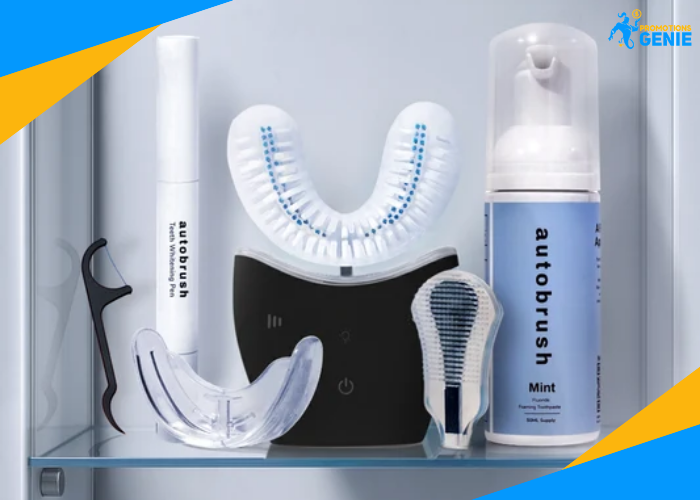
AutoBrush is an oral-care company built around a U-shaped powered toothbrush. Rather than placing a small brush head against two or three teeth at once, AutoBrush surrounds the dental arches with a mouthpiece containing rows of bristles. Sonic vibration and manual side-to-side/figure-eight movement then help the bristles contact multiple surfaces simultaneously. The current adult Sonic Pro uses a U-shaped nylon brush head and offers 30-, 60- and 90-second timers. AutoBrush also provides three cleaning modes: gentle/daily cleaning, deep cleaning and gum care/stimulation.
The company offers different mouthpiece sizes rather than pretending that one universal U-shaped head fits everyone. Adult brush-head options include small, regular and XL dimensions, while children's versions are divided into age-oriented sizes. That matters. The fundamental challenge with any U-shaped toothbrush is contact. If the mouthpiece doesn't sit properly against your teeth and gumline, adding more vibration won't magically solve the problem. AutoBrush's sizing system is therefore one of its more important practical advantages.
Is AutoBrush Legit?
Yes. And there's unusually strong evidence for saying so. The ADA currently lists the AutoBrush U-shaped Toothbrush Series in its Seal of Acceptance database. According to the ADA, the series has demonstrated safety and efficacy in removing plaque and helping prevent and reduce gingivitis when used according to directions. The distinction matters because the internet is filled with cheap U-shaped devices that look broadly similar. A similar shape does not mean equivalent performance. The ADA explains that products receiving its Seal must provide scientific evidence supporting safety and efficacy, which is evaluated by its Council on Scientific Affairs.
So if you're researching AutoBrush reviews because you're worried that the product is simply another social-media gadget, the evidence puts it in a considerably stronger position than generic U-shaped alternatives. That doesn't mean every marketing claim should be interpreted as an independent ADA claim. AutoBrush advertises additional performance figures from its own cited clinical research; those manufacturer claims should be distinguished from the ADA's narrower accepted claims around plaque removal and gingivitis.
Check Today's Price
How Does AutoBrush Sonic Pro Work?
AutoBrush looks almost nothing like a Philips Sonicare or Oral-B toothbrush. The most obvious difference is the mouthpiece. You attach the appropriately sized U-shaped head, distribute toothpaste as directed, place the mouthpiece over your teeth, and activate the chosen cleaning cycle. But "automatic toothbrush" can create the wrong impression. You don't simply bite down and wait.
AutoBrush specifically instructs users to combine its U-shaped nylon head with side-to-side and figure-eight movement to help the bristles contact tooth surfaces during the cycle. Consumer Reports similarly noted that movement is part of the recommended technique when it examined the Sonic Pro.
That's crucial to understanding does AutoBrush work? Think of it as a whole-mouth powered toothbrush rather than a completely hands-free dental-cleaning machine.
Key Features
U-Shaped Nylon Brush Head
The mouthpiece is what separates AutoBrush from virtually every mainstream electric toothbrush. Instead of a small round or oval head, the U-shaped design allows the bristles to surround multiple teeth at once. AutoBrush uses nylon bristles rather than relying entirely on flexible silicone nubs. Consumer Reports describes the Sonic Pro mouthpiece as having rows of nylon and silicone bristles, while the company's current product information emphasizes its U-shaped nylon brushing system. For buyers comparing AutoBrush with inexpensive online copies, that's worth paying attention to. The design still requires good fit and technique, but it behaves more like actual brushing than many novelty U-shaped devices.
30-, 60- and 90-Second Timers
Speed is AutoBrush's headline advantage. The Sonic Pro currently gives users three timer options: 30, 60 and 90 seconds. The attraction is obvious. A person who routinely rushes through a conventional two-minute brushing session may find a short structured routine much easier to maintain. But there's an important caveat. The ADA's general oral-hygiene recommendation remains brushing for two minutes twice per day with soft bristles. AutoBrush's shorter cycle is therefore specific to how its simultaneous-contact design is intended to be used; it shouldn't be interpreted as the ADA replacing its general two-minute recommendation for ordinary toothbrushes. If your dentist has given you specific brushing instructions because of gum disease, orthodontics, implants or another dental concern, follow that personalized advice rather than assuming a shorter cycle is appropriate.
Three Cleaning Modes
AutoBrush doesn't force every user into one vibration level. The Sonic Pro offers three modes. The green setting provides a gentler everyday clean, blue is intended for deeper cleaning, and red is positioned around gum care and stimulation. This is particularly useful during the adjustment period. A full-mouth brush feels very different from a conventional electric toothbrush. Users who initially find the sensation intense can begin with the gentler mode instead of deciding within the first two days that the product isn't for them.
LED Modes
The Sonic Pro also incorporates red and blue LEDs. AutoBrush markets blue light around whitening support and red around gum health, with a dual mode combining them. These are interesting additions, but they aren't the reason we'd buy the toothbrush. The ADA's specific acceptance statement for the AutoBrush U-shaped series centers on plaque removal and helping prevent and reduce gingivitis. Treat the LEDs as supplementary features rather than the core justification for choosing AutoBrush. The brush head, fit, technique and consistency matter much more.
First Impressions
AutoBrush immediately feels different from a standard electric toothbrush. There is a learning curve simply because you've spent your entire life thinking about brushing as moving a small head around individual areas. Here, your mouth is largely enclosed by the U-shaped head. The initial experience can feel bulky. Fit becomes much more important than with a conventional toothbrush, and you'll need to learn the recommended motion instead of merely holding the device stationary. Once that becomes familiar, the appeal starts making sense. You aren't mentally dividing your mouth into quadrants or wondering whether you've spent enough time on each section. The process feels more standardized. For someone who hates brushing, that reduction in friction may be more valuable than another smart sensor or mobile app.
Performance: Does AutoBrush Really Work?
This is where an AutoBrush Sonic Pro review needs to separate three different questions.
First: can it remove plaque?
There is meaningful evidence that it can. The ADA's current acceptance statement confirms demonstrated efficacy in plaque removal and helping prevent and reduce gingivitis when used as directed.
Second: will every person get equally good results?
No. Mouthpiece fit and brushing technique introduce variables that don't disappear simply because the product has scientific validation.
Third: is it automatically better than Sonicare or Oral-B for everyone?
Also no. AutoBrush's real advantage is the combination of coverage, speed and behavioral convenience.
If you already brush meticulously for two minutes with a high-quality conventional powered toothbrush, floss appropriately and follow your dentist's advice, switching to AutoBrush isn't automatically an upgrade. But if your current routine is inconsistent, rushed or unpleasant, AutoBrush becomes much more compelling.
What Does It Feel Like After Brushing?
The Sonic Pro can provide a surprisingly thorough clean once the technique is familiar. Because the bristles contact multiple areas at once, the experience feels less directional than using an Oral-B oscillating head or Sonicare's elongated head. You aren't "working" around the mouth in the same way. That may appeal to users with limited dexterity or anyone who finds conventional technique frustrating. The tradeoff is feedback. With a normal electric toothbrush, you know exactly which tooth you're brushing. AutoBrush makes individual contact less obvious. Some people will love that simplicity. Others will miss the precision.
Hard-to-Reach Teeth
This is one area where expectations need to remain realistic. Independent testing of the children's Sonic Pro by Live Science found that a 30-second clean removed almost all disclosed plaque from the front and back surfaces in its test, with further improvement after another 30 seconds. However, some plaque remained on the back molars because the child had difficulty reaching them effectively with the mouthpiece. That's a meaningful limitation. A U-shaped toothbrush only performs well where its bristles actually make contact. Correct sizing and technique aren't optional. If you buy AutoBrush, spend time learning how it should sit and move rather than assuming the device does everything for you.
AutoBrush for Kids Review
The kids version may actually be the strongest argument for AutoBrush. Children don't care about sophisticated plaque-removal technology. They care that brushing is boring. AutoBrush attacks that behavioral problem directly. The Sonic Pro Kids combines its U-shaped cleaning system with colorful designs, selectable timers, multiple modes and music. Live Science found the product particularly successful at making brushing more enjoyable, although its reviewer also found the shape initially tricky and noted difficulty reaching the very back teeth. That balance is important.
For a child who already brushes thoroughly and willingly with a normal electric toothbrush, AutoBrush may be unnecessary. For a child who fights brushing every night, however, a toothbrush they'll actually use consistently can be extremely valuable. Current customer feedback reinforces that theme. Walmart's listing had more than 1,000 ratings when checked for this review, with repeated positive themes around easier routines, kid-friendly design, music and ease of operation. Negative experiences included concerns about fit, cost and cleaning effectiveness for particular children. The brand's own customer feedback also repeatedly emphasizes children becoming more willing to brush, although manufacturer-hosted reviews should naturally be weighed differently from independent testing.
AutoBrush Pricing & Value
At the time of writing, the adult Sonic Pro is listed at $89 for a one-time purchase, with the site showing a promotional/subscription price around $74. Pricing and promotions can change, so check the current offer before purchasing. That isn't cheap. But it's not wildly outside premium electric-toothbrush territory either. The more important expense is replacement heads. AutoBrush currently lists its single-sided nylon replacement head at $28 one-time, with subscription/promotional pricing around $24–$25 depending on the offer shown. Its product page recommends replacement every 30–60 days for that head. Those recurring costs deserve consideration.
Over several years, the toothbrush itself becomes the smaller part of the total investment. If AutoBrush dramatically improves your consistency, that expense may be justifiable. If you're already perfectly happy with a $40–$70 electric toothbrush and inexpensive replacement heads, the economics are less compelling.
Explore BRAND Collections
AutoBrush Pros & Cons
| Pros | Cons |
| ADA Seal of Acceptance for the U-shaped toothbrush series | Higher ongoing cost than many standard brushes |
| Whole-mouth U-shaped design | Takes time to learn the correct technique |
| Nylon bristles | Mouthpiece fit is critical |
| Very short cleaning cycles | Rear molars may be harder for some users |
| 30/60/90-second timer choices | Less precise tooth-by-tooth feedback |
| Three cleaning modes | Replacement heads aren't cheap |
| Multiple brush-head sizes | U-shaped sensation won't suit everyone |
| Particularly appealing for reluctant kids | Kids designs can feel childish for older children |
| Can make brushing easier to stick with | LEDs aren't a reason alone to buy it |
Who Should Buy AutoBrush?
AutoBrush makes the most sense when convenience is currently preventing good oral-care habits. If you repeatedly rush brushing, dislike moving a traditional toothbrush around every tooth, have difficulty maintaining a routine, or simply want something dramatically different from a conventional electric toothbrush, the Sonic Pro deserves serious consideration. Parents may find even more value. The AutoBrush for Kids reviews we've examined consistently suggest that making brushing enjoyable is one of the product's biggest strengths. That doesn't eliminate the need for supervision and good technique, particularly for younger children, but it can transform brushing from an argument into a routine.
| User | Recommendation |
| Adults who hate long brushing routines | Excellent Fit |
| Reluctant young brushers | Excellent Fit |
| Users wanting U-shaped convenience | Excellent Fit |
| People with limited dexterity | Worth Considering |
| Existing Sonicare/Oral-B power users | Depends on priorities |
| Precision-focused brushers | Conventional brush may be better |
| Budget shoppers | Look elsewhere |
Who Should Avoid AutoBrush?
Don't buy it merely because "30 seconds" sounds futuristic. If you enjoy conventional brushing, consistently achieve good dental checkups and want complete control over exactly where the brush head sits, Sonicare or Oral-B may feel more natural. It's also not ideal for someone unwilling to spend time finding the correct mouthpiece size and learning the figure-eight/side-to-side technique. Budget-conscious buyers should consider ongoing replacement-head costs before purchasing. And anyone with significant dental problems, recent oral surgery, complex orthodontics or dentist-prescribed home-care instructions should discuss a major change in brushing method with their dental professional.
Customer Feedback Summary
Customer feedback is broadly positive, but there are recurring patterns worth understanding. The strongest positive theme is compliance. Parents repeatedly report that children who previously resisted brushing become more willing to do it. Walmart's review pool, which exceeded 1,000 ratings when checked, highlights easier routines, appealing design and music among commonly discussed positives. Adults reviewing the product on AutoBrush's own site frequently praise the clean feeling and convenience, while some mention that replacement heads and proprietary-style accessories feel expensive.
Negative feedback tends to revolve around fit, cost and the feeling that certain areas aren't being contacted as thoroughly as expected. Live Science's hands-on kids test gives that last concern some credibility: front and back plaque removal was impressive in its disclosure test, but the rear molars proved more challenging. The fairest interpretation isn't "AutoBrush works perfectly" or "U-shaped toothbrushes don't work." It's that this particular U-shaped system has credible evidence behind it, but correct sizing and use still matter.
AutoBrush vs Sonicare vs Oral-B
The best comparison isn't simply specifications because these products approach brushing differently.
| Feature | AutoBrush Sonic Pro | Philips Sonicare | Oral-B |
| Head Style | U-shaped whole-mouth | Conventional elongated | Small round head |
| Brushing Approach | Simultaneous multi-surface contact | Tooth-by-tooth sonic | Tooth-by-tooth oscillating/rotating |
| Main Advantage | Speed & convenience | Familiar sonic cleaning | Precise individual-tooth control |
| Learning Curve | Higher initially | Low | Low |
| Kids Appeal | Excellent | Very Good | Very Good |
| Manual Positioning | Less | More | More |
| Precision Feedback | Moderate | High | Very High |
| Best For | Routine simplification | Traditional electric-brush users | Detail-focused brushing |
AutoBrush vs Sonicare
The AutoBrush vs Sonicare decision mostly comes down to whether you want to change how you brush. Sonicare modernizes the traditional toothbrush. AutoBrush redesigns the process. Someone already satisfied with Sonicare may find little reason to switch unless reducing brushing time or simplifying technique is particularly valuable. Someone who hates conventional brushing may find AutoBrush transformative.
AutoBrush vs Oral-B
The contrast with Oral-B is even stronger. Oral-B's signature small round powered heads encourage deliberate tooth-by-tooth positioning. AutoBrush goes in the opposite direction by trying to contact much of the mouth simultaneously. Choose Oral-B if precision and familiarity matter most. Choose AutoBrush if convenience and routine compliance are your biggest problems.
Is AutoBrush Worth It?
For the right person, yes. The current ADA acceptance changes the conversation considerably because buyers no longer have to rely entirely on manufacturer marketing to establish whether the basic U-shaped brushing concept has credible efficacy behind it. The ADA specifically recognizes the AutoBrush U-shaped series as safe and effective for its accepted plaque-removal and gingivitis claims when used as directed. That doesn't make it superior to every conventional electric toothbrush. The ADA itself notes that both manual and powered brushes can effectively remove plaque, and good technique remains fundamental.
AutoBrush is worth paying for when its design solves a real problem. If that problem is "I don't brush consistently because I hate brushing," it has a compelling answer. If the problem is "I already brush perfectly but want slightly better technology," the value proposition is weaker.
Frequently Asked Questions
1. Does AutoBrush really work?
There is credible evidence supporting AutoBrush's core cleaning function. The American Dental Association currently awards the AutoBrush U-shaped Toothbrush Series its Seal of Acceptance for demonstrated safety and efficacy in removing plaque and helping prevent and reduce gingivitis when used as directed.
2. Is AutoBrush ADA accepted?
Yes. The AutoBrush U-shaped Toothbrush Series appears in the ADA's official Seal of Acceptance product database.
3. Does AutoBrush really clean your teeth in 30 seconds?
The Sonic Pro is designed around a 30-second whole-mouth cycle, with 60- and 90-second options also available. It relies on simultaneous contact from the U-shaped head and the recommended brushing motion.
4. Do you have to move AutoBrush?
Yes. It shouldn't simply sit stationary in your mouth. AutoBrush recommends side-to-side and figure-eight movement to help the U-shaped bristles contact tooth surfaces properly.
5. Is AutoBrush good for kids?
It can be particularly useful for children who resist conventional brushing. Independent testing found its music, short cycles and playful design effective at encouraging brushing, although rear-molar coverage can depend on fit and technique.
6. Is AutoBrush better than Sonicare?
Not universally. AutoBrush prioritizes simultaneous coverage and shorter routines, while Sonicare maintains a more conventional tooth-by-tooth brushing approach. The better choice depends on whether convenience or traditional precision matters more to you.
7. Is AutoBrush better than Oral-B?
Again, neither is automatically better. Oral-B's conventional powered brushes provide highly deliberate tooth-by-tooth positioning, while AutoBrush focuses on whole-mouth convenience.
8. How often should you replace an AutoBrush head?
Replacement guidance can vary by head. AutoBrush's current single-sided nylon head page recommends replacing that brush head every 30–60 days.
9. Can you use regular toothpaste with AutoBrush?
Yes. AutoBrush sells foaming toothpaste designed for its system, but independent testing and brand materials indicate that conventional toothpaste can also be used, although application and cleanup may be less convenient.
10. Is AutoBrush a scam?
No. AutoBrush is an established oral-care product, and its U-shaped toothbrush series currently holds the ADA Seal of Acceptance for specified plaque and gingivitis benefits.
11. How much is AutoBrush?
At the time checked, the adult Sonic Pro was listed at $89 one-time, while the site displayed promotional/subscription pricing around $74. Prices and promotions can change.
12. Is AutoBrush worth it?
It's most worthwhile for people who value a dramatically shorter, simpler routine or have difficulty consistently using a conventional toothbrush. People already happy with traditional premium electric brushes may get less benefit from switching.
Final Verdict: AutoBrush Review
AutoBrush is easy to dismiss at first glance. U-shaped toothbrushes have become common online, and many inexpensive versions make ambitious promises without giving buyers much reason to trust them. AutoBrush is different in one important respect. Its U-shaped toothbrush series currently carries the ADA Seal of Acceptance, with the ADA stating that the system has shown efficacy in removing plaque and helping prevent and reduce gingivitis when properly used. That gives the Sonic Pro considerably more credibility than a typical gadget toothbrush. But the strongest reason to buy it is still behavioral. AutoBrush makes brushing fast.
It makes it different. For kids, it can make brushing fun. And for people who routinely fail to maintain a conventional brushing routine, those things can matter enormously. There are compromises. Replacement heads are relatively expensive. Fit is critical. The brushing motion takes practice. Independent testing suggests that rear molars can present difficulties for some users. And if you already love your Sonicare or Oral-B, AutoBrush doesn't automatically provide a reason to abandon it. For reluctant brushers, however, the equation changes.
A theoretically perfect toothbrush that sits unused isn't particularly useful. AutoBrush's greatest achievement is making a proper routine feel easier to start and easier to repeat.
Best for: Busy adults, reluctant brushers, families with children who dislike brushing and anyone specifically seeking a credible U-shaped toothbrush.
Skip it if: You prefer precise tooth-by-tooth control, want the cheapest long-term ownership cost or already have excellent results with a conventional electric brush.
Overall Value: Very Good
Shop BRAND Now
At PromotionsGenie, we are dedicated to helping you shop more intelligently, spend more judiciously, and find superior value online. Regardless of whether you are a student, a parent, a fashion enthusiast, or just a sensible shopper, we link you to dependable savings opportunities and trustworthy buying options from your preferred brands across the globe
Subscribe
Sign up below to receive money-saving tips, frugal ideas, family-friendly recipes, and more.